


Microphone handling affects the sound of a handheld vocal microphone. Understanding where to place your hand helps you keep the sound more consistent for the application.
A handheld microphone may use the same basic technology as other microphones, but the way it is held can change its response. Some performers deliberately use those changes; others may not realize they are happening.
This article explains how different grips can affect the result.
Laboratory Measurements and Real-World Use
Laboratory measurements use controlled conditions to reduce influences from nearby objects and supports. A microphone may be suspended or mounted in a carefully specified arrangement so that its characteristics can be assessed consistently.
On stage, the microphone is surrounded by a performer, hands, monitors, and other objects. These conditions can change its behavior. Measurement methods and distances vary, so laboratory results should be interpreted alongside the intended application.
How Microphone Handling Changes the Sound
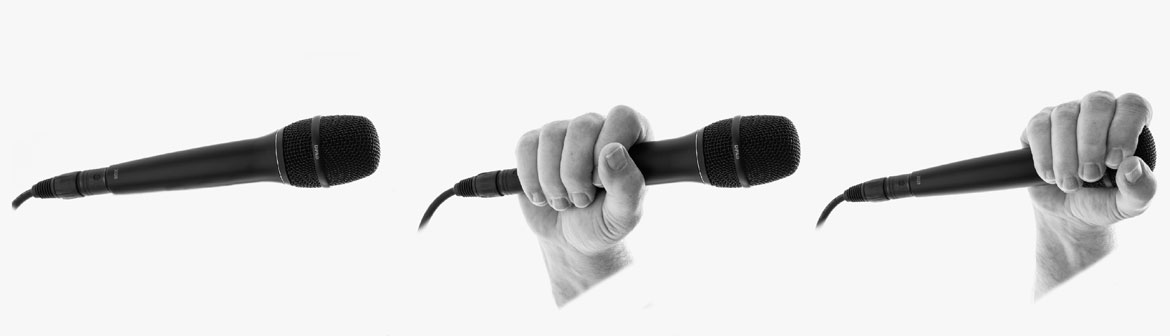
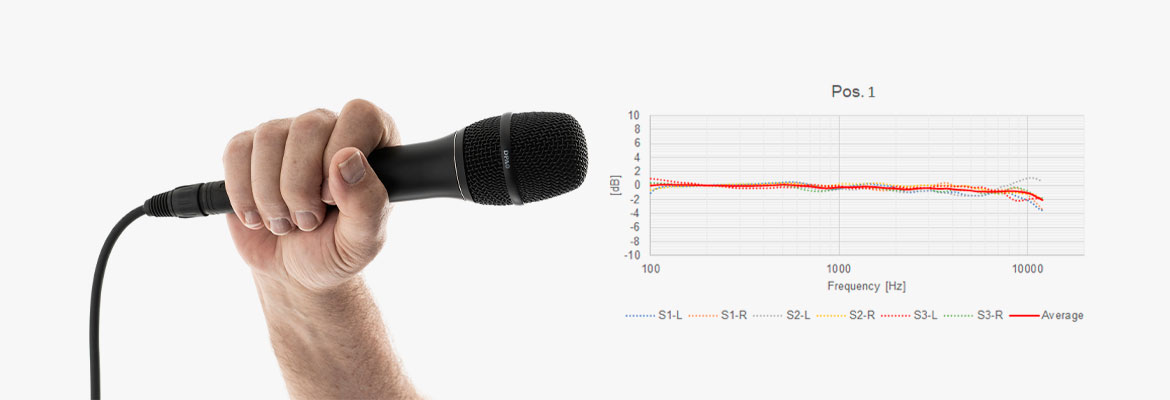
A handheld microphone can be held by its body or gripped around the grille. Your hands and head close to the capsule can affect both frequency response and directional behavior.
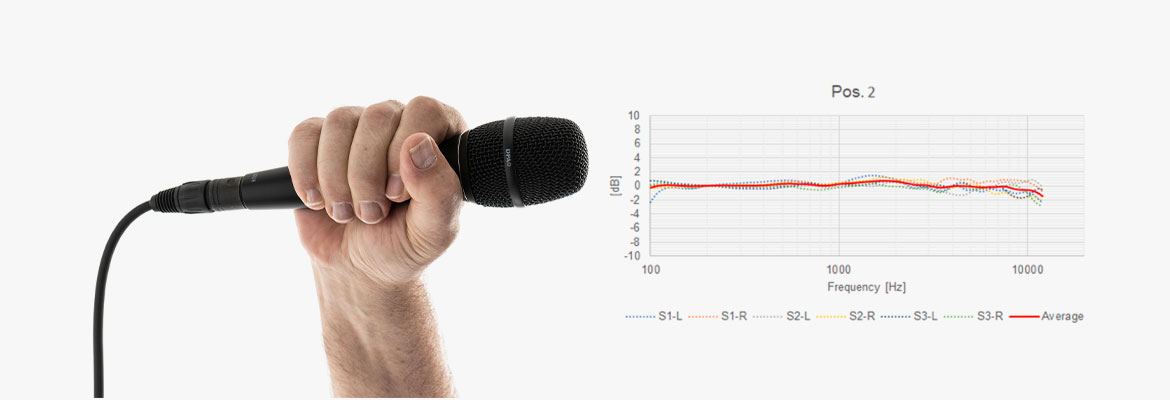
Holding the body: gripping the handle clear of the grille generally causes fewer changes. This is the usual approach for a consistent vocal sound.
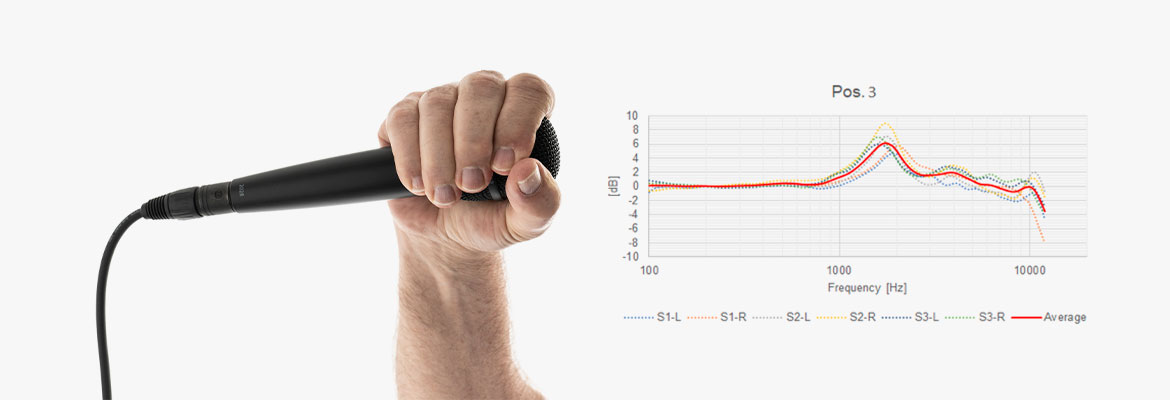
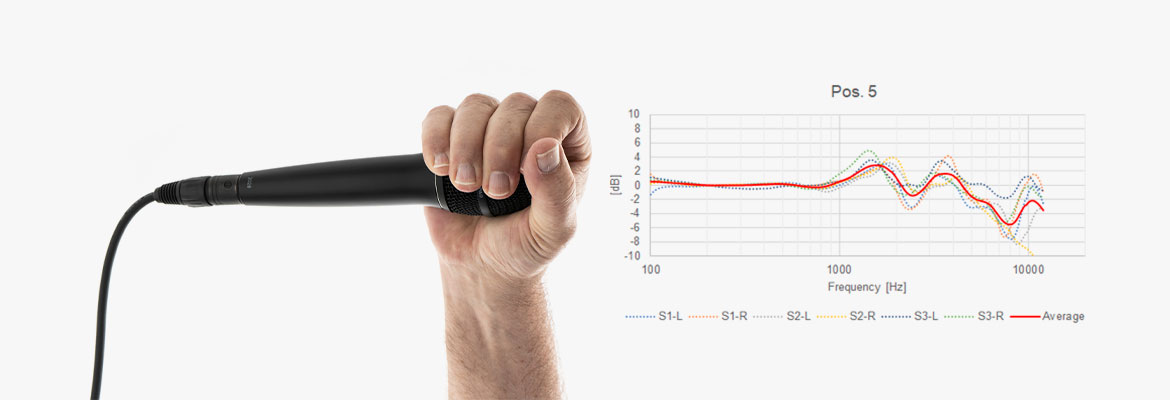
Cupping the grille: wrapping a hand around the microphone head can alter its response and polar pattern. This may introduce coloration and reduce gain before feedback in a sound reinforcement system.
Example 1

Hand positioned near the bottom of the microphone body
Holding the lower part of the body: this grip usually has little effect on the sound.
Example 2

Hand positioned immediately below the microphone grille
Holding just below the grille: this may produce a small change, depending on the microphone and the exact grip.
Example 3

Index finger and thumb cupped around the microphone grille
Cupping the grille with the index finger and thumb: the resulting resonances and response changes can audibly color the sound.
Example 4

Hand wrapped around the microphone grille

Wrapping the hand around the grille: a more extensive grip can produce stronger coloration and affect how the microphone behaves with the PA.
Practical Vocal Microphone Technique
For a consistent sound, hold the microphone by its body and keep the grille clear. Mouth position, distance, angle, and vocal delivery also affect the result.
Beatbox performers may deliberately use different grips to shape their sound. That is a creative technique rather than the usual approach for an uncolored vocal.
Choosing the microphone is important too. Read our guide to dynamic vs condenser microphones (Vietnamese).
Further reading: DPA Microphones — Proper hand placement on a vocal mic.
Explore more B-Star audio guides.