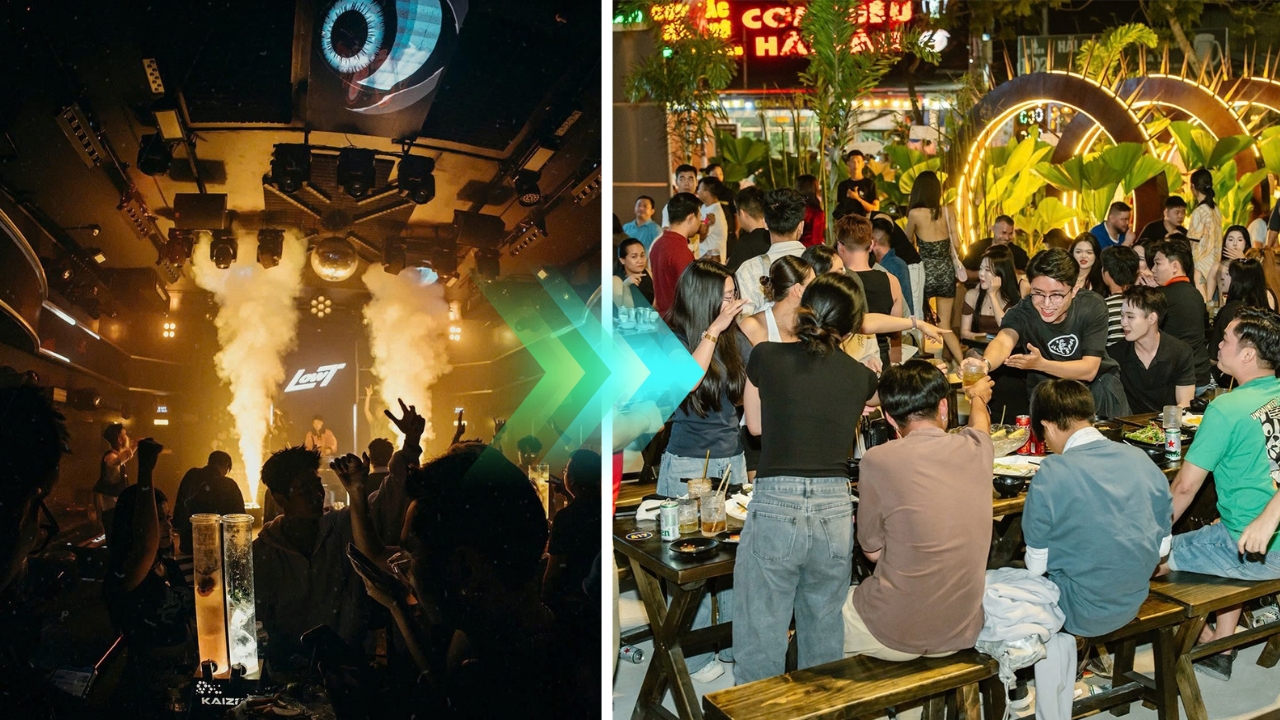


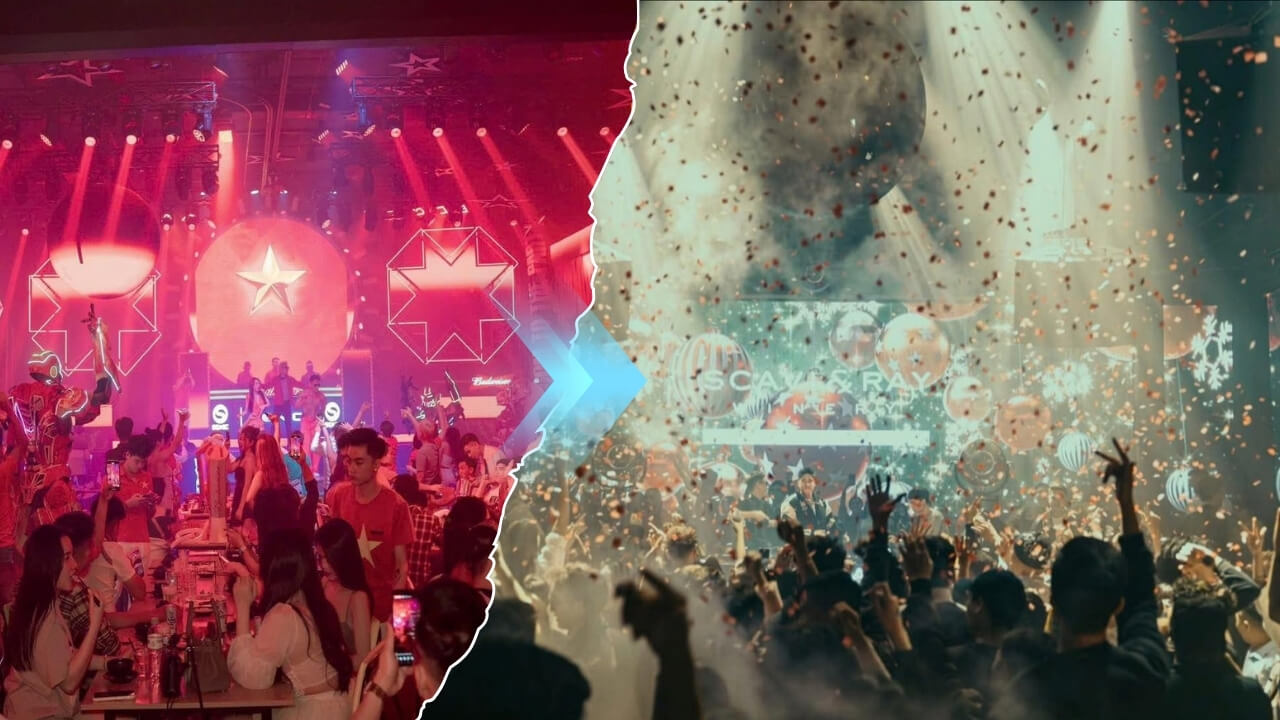

Converting a beer garden to a club raises a different set of audio questions from making the change in the opposite direction. In our previous article, B-Star examined the transition from a nightclub to a beer club or beer garden, and why it does not necessarily require replacing the entire sound system.
Read more: From Club to Beer Garden: When Can You Keep the Existing Sound System? (Vietnamese)
When a beer club becomes a nightclub, however, the requirements often change substantially.
Why the Reverse Transition Is More Demanding
A common assumption is:
“We already have a sound system. To become a nightclub, we just need to turn it up.”
The volume control only changes the level within the capabilities of the existing system. It does not add loudspeakers, amplifiers, signal processing, electrical capacity, or better loudspeaker positions.
Driving a system beyond its design limits does not give it the capabilities of a nightclub system. It often leads to distortion, overloaded equipment, and premature failure.
Reducing the level may be within the system’s existing capabilities. Increasing its capacity requires changes at system level.

Beer Clubs and Nightclubs Differ in More Than Volume
It would be wrong to assume that every beer garden has an underpowered system, or that every nightclub simply needs more volume.
The key difference is the intended guest experience.
In a beer garden or beer club, sound usually needs to balance a lively atmosphere with dining, conversation, performances, and control of noise reaching surrounding areas.

In a nightclub, music is usually the main attraction. The system must provide the output, coverage, and powerful, controlled bass needed for the expected club experience. It must also remain stable throughout busy operating periods.

When a beer club or beer garden becomes a nightclub, the question is:
Can the existing system deliver the required nightclub experience in the new layout and operating conditions?
Why Turning Up the Volume Is Not Enough
Every system has limits. Those limits extend beyond the power ratings printed on the equipment. They also depend on:
- The sound level that can be sustained in the listening area.
- Available headroom.
- Distortion at high operating levels.
- Coverage consistency.
- Amplifier capacity.
- Signal processing and limiting.
- The electrical supply.
- Cooling and ventilation.
- How full-range loudspeakers and subwoofers interact with the room.
Turning up the volume moves the system closer to those limits.
An operator may keep increasing the input because the system does not feel powerful enough. A higher signal level, however, does not necessarily produce a better musical experience for the audience.

What Should Venue Owners Consider Before Converting?
When converting a beer garden to a club, start by dividing the existing system into three groups:
- Equipment that can be retained.
- Equipment that can be retained with reconfiguration or additional support.
- Equipment that no longer suits the new requirements.
Following a site survey, the work generally falls into four levels.

Level 1: Reset the Operating Approach
This applies when the existing system already has sufficient capacity but has not been operated as a nightclub system.
Level 2: Reconfigure the System
This applies when the equipment remains suitable, but its routing or processing does not meet the new objectives.
Level 3: Add Equipment Selectively
This applies when specific parts of the system lack capacity—for example, insufficient bass, coverage, amplification, electrical infrastructure, or mechanical support.
Level 4: Replace Equipment That No Longer Fits
Some equipment may no longer meet requirements for:
- Target sound energy.
- Coverage.
- Stable operation.
- System compatibility.
- Expansion.
- Safety.
Keeping it at all costs can result in expensive modifications with limited benefits. B-Star has encountered seriously deteriorated equipment that could not be repaired. In other cases, repair would still leave reduced performance or safety concerns.
What to Prepare Before the Transition
- Gather the essential information. Ask a reputable specialist to assess the system before committing to equipment purchases. Email us to request a sound system assessment form.
- Avoid driving the old system beyond its capabilities. This can reduce service quality and cause equipment to fail earlier than expected.
- Set a budget from the outset. A clear budget helps balance business objectives with the necessary investment.
Owners should treat the transition as a genuine equipment investment, rather than a routine adjustment to the volume control.

Lessons from Real Projects
Problems during a change of venue format often begin before equipment or brands are selected. The expectations for the new business model have not yet been translated into specific technical requirements.
If the brief is simply “make it sound more powerful,” the solution can become a collection of unrelated additions. Engineers need clearer information: which areas require sound energy, the intended experience, music styles, operating hours, capacity, and room conditions. This provides a basis for assessing the system and developing an appropriate design.

Through practical consulting work, we have found that the two directions create very different challenges:
- Nightclub to beer club or beer garden.
- Beer club or beer garden to nightclub.
Both require a site survey.

Frequently Asked Questions
Can existing equipment be reused when converting a beer club to a nightclub?
Yes. A site survey is needed to determine which equipment remains suitable and which parts require replacement or additional support, using the approaches described above.
Why is adding more loudspeakers not enough?
Adding loudspeakers without reassessing the complete system—including sources, signal processing, and compatibility between components—can create new problems instead of solving the original ones.
This is why the work should begin with a survey and system design, rather than isolated additions.
How can I tell whether the existing system is suitable for a nightclub?
We need the key system information, the floor plan, and the condition of the equipment. A brief impression is not enough for a decision that directly affects the business objectives and investment budget.
Conclusion
Moving from a nightclub to a beer club or beer garden, and converting a beer garden to a club, may appear to be two sides of the same issue. In practice, they present very different technical challenges.
Understanding those differences helps owners set more realistic budgets and expectations from the beginning.
If you are planning this type of change, send B-Star your floor plan and details of the existing system. Our team can survey the venue and recommend an appropriate approach.
B-STAR TRADING – SERVICE – DEVELOPMENT COMPANY LIMITED
Unit B-3, Quang Thai Building, 111B Ly Thanh Tong Street, Phu Thanh Ward, Ho Chi Minh City
Hotline: (+84) 911 171 969
Email: info@b-star.vn